Loft conversions across Birmingham and the West Midlands
We convert lofts across Birmingham and the West Midlands, from Wolverhampton and Walsall to Shrewsbury and Worcester. The national planning rules are the same everywhere, but the local position is not: conservation areas, Article 4 directions and estate schemes change what needs permission from one district to the next. These pages set out what applies in each area.
Moseley
B13, Birmingham City Council
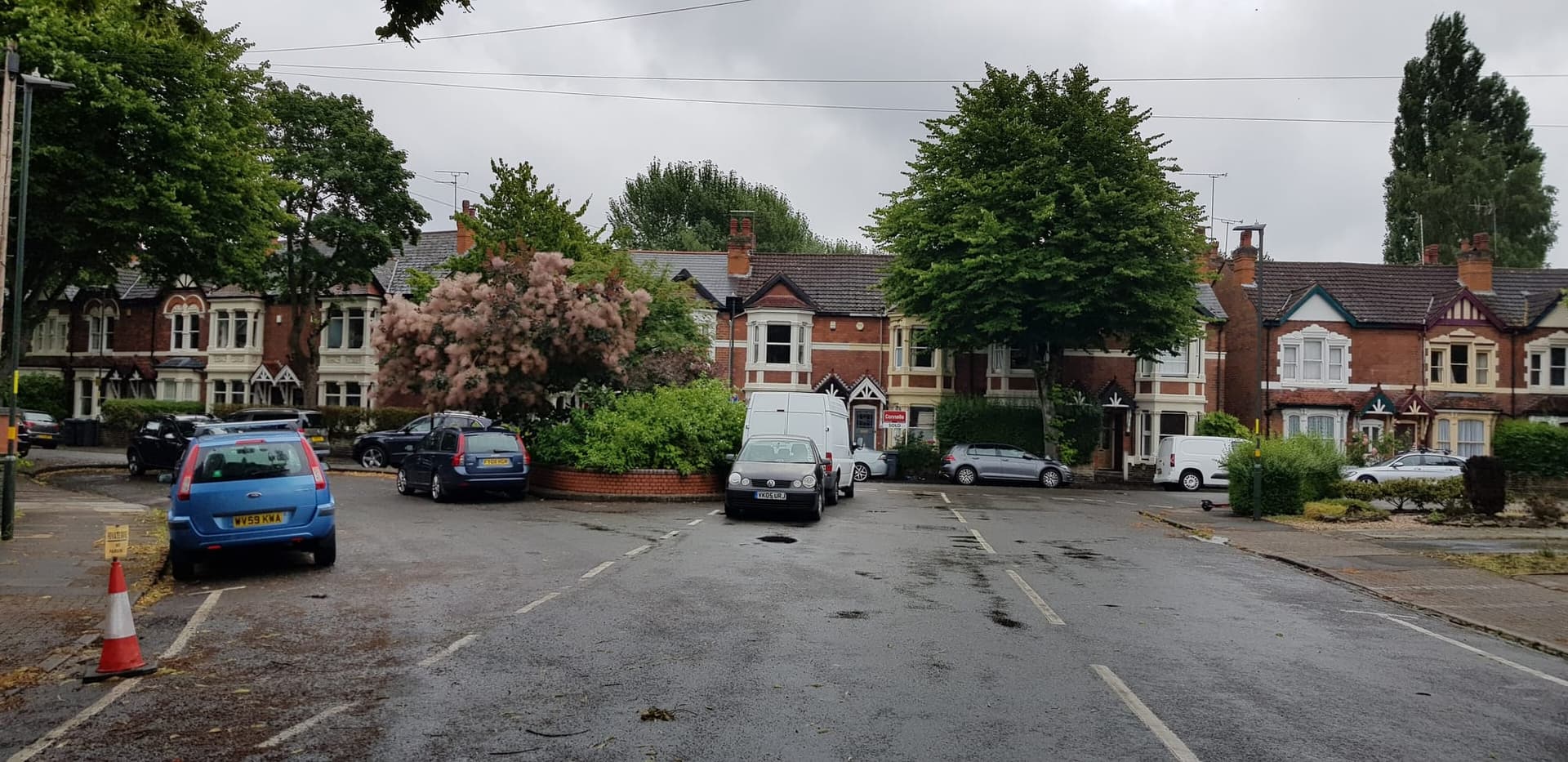
Much of Moseley sits inside the Moseley and St Agnes conservation areas, and both have Article 4 directions covering parts of them. That means a dormer on many Moseley houses needs full planning permission, so the design has to suit the street from the start.
Kings Heath
B14 (and parts of B13), Birmingham City Council
Kings Heath is mostly late Victorian and Edwardian terraces with rear outriggers, and it has no conservation area. That makes it one of the places in Birmingham where an L-shaped dormer is often possible as permitted development, provided it stays inside the 40 cubic metre allowance for terraced houses.
Edgbaston
B15, B16 and B17, Birmingham City Council
Edgbaston has more layers of control than almost anywhere else in Birmingham. Much of it is in the Edgbaston conservation area, part of which has an Article 4 direction; there are four more conservation areas in the district; and many homes sit on the Calthorpe Estate, which has its own scheme of management.
Harborne
B17, Birmingham City Council
Harborne has three conservation areas with different rules. Moor Pool and Greenfield Road both have Article 4 directions, Harborne Old Village does not, and in all three a dormer needs planning permission.
Bournville
B30 and parts of B29 and B31, Birmingham City Council
In Bournville, planning permission is only half of the approval. Homes inside the Bournville Estate Scheme of Management also need the Bournville Village Trust's approval for alterations, and the Trust publishes design guides for each part of the estate.
Hall Green
B28, Birmingham City Council
Hall Green is 1920s and 1930s semi-detached country, and most of those semis have hipped roofs. The conversion that suits them is almost always a hip-to-gable change with a rear dormer, which can often be done as permitted development within the 50 cubic metre allowance for semi-detached houses.
Sutton Coldfield
B72 to B76, Birmingham City Council
Sutton Coldfield has its own town council, but planning applications are still decided by Birmingham City Council, with the town council commenting on them. Three conservation areas sit in the town (Four Oaks, Anchorage Road and High Street), and only High Street has an Article 4 direction.
Solihull
B90 to B94, Solihull Metropolitan Borough Council
Solihull is a separate borough, so planning applications and Building Regulations for a loft conversion in Solihull, Shirley, Olton or Knowle go to Solihull Metropolitan Borough Council, not Birmingham. The national permitted development rules are the same; the conservation areas, the forms and the local guidance are Solihull's.
Wolverhampton
WV1 to WV4, WV6, WV9 to WV11 and Bilston in WV14, City of Wolverhampton Council
A loft conversion in Wolverhampton is a matter for the City of Wolverhampton Council, not Birmingham. The city has 31 conservation areas, and 13 of them, including Park, Tettenhall Greens and Castlecroft Gardens, also have Article 4 directions that take away more permitted development rights.
Walsall
WS1 to WS5, WS8, WS9, WV12, WV13 and parts of WS10, B43 and B74, Walsall Council
Walsall Council is the planning authority for the whole borough, from Bloxwich and Willenhall to Aldridge and Streetly. It has 18 conservation areas, and in two of them, Highgate and Great Barr, Article 4 directions made in 1991 remove the permitted development rights for roof extensions and for other roof alterations on the houses they cover.
West Bromwich
B70, B71 and parts of B43, Sandwell Council
West Bromwich is in Sandwell, so a loft conversion here goes to Sandwell Council, not Birmingham. The town has one conservation area, High Street, and a 2012 Article 4 direction removes the rights to extend or alter the roof of named houses in Lodge Road, Edward Street, Dartmouth Street, Sandwell Road, Grange Road and Bratt Street.
Dudley
DY1 and DY2, Dudley Metropolitan Borough Council
Most houses in Dudley sit outside its conservation areas, so a rear dormer within the permitted development limits needs no planning application. That matters here, because when an application is needed, Dudley Council's Residential Design Guidance SPD (2023) says dormers will only be permitted in very exceptional circumstances.
Stourbridge
DY8 and DY9, Dudley Metropolitan Borough Council
In Stourbridge the street decides the route. Love Lane in Oldswinford is a conservation area with an Article 4 direction, so even rooflights or new roof tiles there need planning permission from Dudley Council.
Kingswinford
DY6, Dudley Metropolitan Borough Council
Kingswinford is a place of detached houses and semis: in the 2021 Census 85 per cent of households in its two wards lived in a detached or semi-detached house or bungalow, against 70 per cent across Dudley borough. Its only conservation area, The Village around St Mary's Church, is small, so for most homes in Kingswinford and Wall Heath the planning question is whether the loft fits the 50 cubic metre permitted development allowance.
Lichfield
WS13 and WS14, Lichfield District Council
Lichfield District Council decides planning in Lichfield, and its District Design Code, adopted in December 2024, limits a dormer that needs planning permission to half the width and half the height of the roof slope. A rear dormer inside the national permitted development limits usually needs no application, but roof extensions are not permitted development in the district's 22 conservation areas.
Cannock
WS11 and WS12, Cannock Chase District Council
Cannock Chase District Council decides planning in Cannock, and its Local Design Guide, adopted in June 2026, says loft conversions should use rooflights where possible and that box-like roof extensions to the front are not acceptable. Most of the town lies outside its two conservation areas, Cannock Town Centre and North Street, Bridgtown, and the council's Article 4 directions cover sites such as markets and motorsport land rather than houses.
Stafford
ST16 and ST17, Stafford Borough Council
Stafford Borough Council handles planning in Stafford, and only one part of the town has an Article 4 direction: Burton Manor Village, the 1920s model village south of the centre, where roof alterations facing a road, rooflights included, need planning permission. In the town's other conservation areas, such as Forebridge or Foregate and St George's, dormers need permission but rooflights usually do not.
Telford
TF1 to TF8, Telford & Wrekin Council
Telford & Wrekin Council decides loft conversion applications in Telford, and the strictest local rule sits in the Ironbridge Gorge. Every house in the borough's part of the World Heritage Site is covered by an Article 4 direction that brings roof alterations, rooflights and dormers under planning control wherever they face a road, a waterway or open space, and most of the Gorge is also the Severn Gorge conservation area.
Shrewsbury
SY1, SY2 and SY3, Shropshire Council
Shropshire Council decides loft conversion applications in Shrewsbury, and the Shrewsbury conservation area reaches well beyond the river loop. Extensions in 1981 and 1997 brought in Kingsland, Abbey Foregate, Mountfields, Castlefields and The Mount, and Belle Vue is a conservation area of its own.
Bridgnorth
WV15 and WV16, Shropshire Council
Almost all of historic Bridgnorth, in High Town and Low Town on both banks of the Severn, is one conservation area, first designated in 1971 and extended three times since. A dormer or hip-to-gable on an older Bridgnorth house therefore needs planning permission from Shropshire Council, and the council's Article 4 map shows a direction covering properties across the conservation area.
Kidderminster
DY10 and DY11, Wyre Forest District Council
Kidderminster is in Worcestershire, so planning applications for a loft conversion go to Wyre Forest District Council. Of the town's four conservation areas, Blakebrook is the one made up mainly of houses, and inside it a dormer needs planning permission.
Worcester
WR1, and the city parts of WR2 to WR5, Worcester City Council
Worcester City Council decides loft conversion applications in the city, which has 19 conservation areas. Three areas also have Article 4 directions: Shrubbery Avenue, Park Avenue and York Place in the Britannia Square conservation area, and on Shrubbery Avenue and Park Avenue they cover roof alterations, including rooflights, on the street side of houses.
Live somewhere not listed, such as Erdington, Northfield, Kings Norton, Acocks Green or Selly Oak? The same rules apply, and our planning guide names the city's conservation areas and the ones with Article 4 directions. Tell us your postcode and we will check yours.