Loft conversions in Wolverhampton
A loft conversion in Wolverhampton is a matter for the City of Wolverhampton Council, not Birmingham. The city has 31 conservation areas, and 13 of them, including Park, Tettenhall Greens and Castlecroft Gardens, also have Article 4 directions that take away more permitted development rights. Outside those boundaries, most houses follow the national permitted development rules.
- Planning authority
- City of Wolverhampton Council
- Conservation areas
- 31 in the city, including Tettenhall Greens, Tettenhall Wood, Park, Penn Fields and Vicarage Road, Penn
- Article 4 directions
- 13 conservation areas (council list, February 2025), plus a city-wide small HMO direction
- Typical houses
- Victorian villas and terraces near the centre, 1920s council estates, interwar and post-war semis
- Postcodes
- WV1 to WV4, WV6, WV9 to WV11 and Bilston in WV14
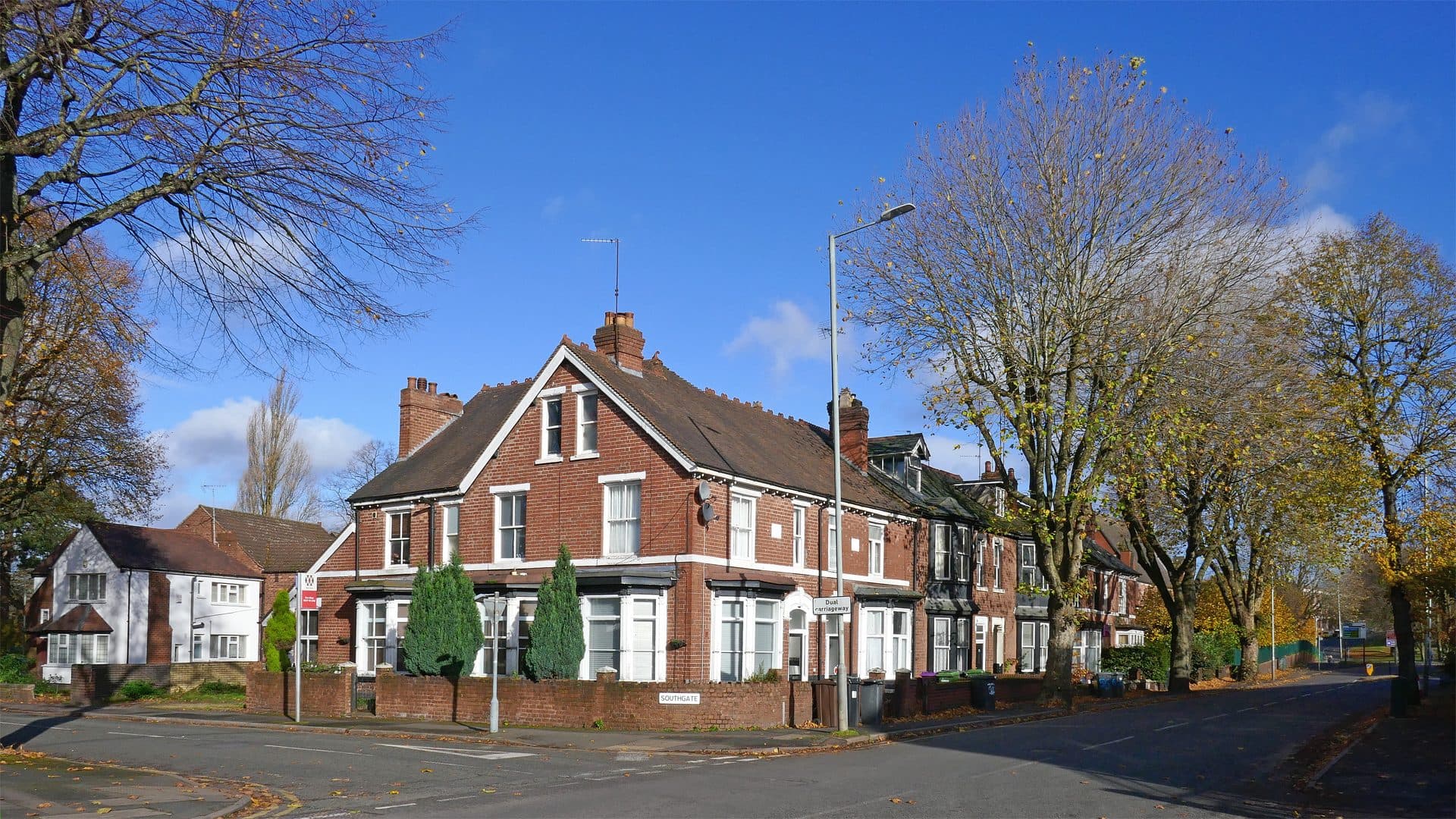
Thirteen areas with an Article 4 direction
The council's conservation page lists all 31 areas and marks which have an Article 4 direction: Tettenhall Greens, Tettenhall Wood, Tettenhall Road, Park, Penn Fields, St Philips (Penn Fields), Vicarage Road (Penn), Copthorne Road, Castlecroft Gardens, Fellows Street (Blakenhall), The Oaks (Merridale Road), Bilston Town Centre and the city centre. In any conservation area a dormer, hip-to-gable or mansard is not permitted development, so it needs planning permission. A direction then brings smaller changes under control too.
The Park direction shows how precise these can be. It names individual houses, the buildings of townscape merit in streets such as Albert Road, Park Road West and Park Dale West, and covers chimneys and alterations that face a road, a waterway or open space. The council's appraisal of Park lists poorly designed dormers among the things that harm the area, and notes that houses of two storeys, or two storeys with a large attic lit by a dormer, are the norm. A new rear dormer that follows that traditional form, in slate or plain clay tile, is the realistic starting point.
The council's guidance on roofs
Wolverhampton's Supplementary Planning Guidance No. 4, Extension to Houses, approved in April 1996, is still on the council's list of planning guidance. Its section on roof extensions asks that dormers do not harm the character of the house or its surroundings, stay below the ridge and look subordinate to the roof, and that roof materials match. Rooflights should line up with the windows and doors below. The guide also says that in most cases rooflights are preferable to dormers, especially where they sit flush with the tiles.
That guidance carries weight whenever an application is needed, such as on a conservation area street. A rear dormer that meets the permitted development limits does not need the council's design approval, though Building Regulations approval is always needed, and a Lawful Development Certificate confirms the position in writing.
From Tettenhall villas to Low Hill semis
Housing changes a great deal across the city, and so does the conversion that fits. Tettenhall and the Park area around West Park have large Georgian and Victorian houses, mostly roofed in slate or clay tile; where the roof is tall enough, rooflights or a modest rear dormer give a good room without a large change to the outside. The terraces of Penn Fields, Blakenhall and Whitmore Reans give less room to work with; where a house has a rear outrigger, an L-shaped dormer can give a bedroom and a shower room within the 40 cubic metre allowance for terraced houses.
The Low Hill and Bushbury council estates were built in the late 1920s, and much of Penn and Finchfield followed between the wars and after. Many semis from those years have hipped roofs, which narrow the loft at one end. A hip-to-gable change with a rear dormer squares the space off, often within the 50 cubic metre allowance for semi-detached houses. Castlecroft Gardens is the exception: its 1930s houses built with reclaimed timbers sit in a conservation area with an Article 4 direction, so any roof change starts with the council.
Questions from Wolverhampton
Do I apply to Wolverhampton or Birmingham for planning permission?
To the City of Wolverhampton Council. It is a separate planning authority with its own conservation areas, Article 4 directions and design guidance. The permitted development limits themselves are national, so they are the same as in Birmingham.
Can I convert the loft of a house in the Park conservation area?
Often, yes, but a dormer or other roof extension needs planning permission because the house is in a conservation area. If it is one of the houses named in the Article 4 direction, changes that face the road and work to chimneys need permission too. Rear rooflights are usually the simplest option.
Does Wolverhampton's HMO Article 4 direction affect a loft conversion?
Only if the house is going to become a small house in multiple occupation. Since 14 September 2017, changing a house to a home shared by three to six unrelated people needs planning permission anywhere in the city. A loft conversion for your own household is not affected.
Ask about a loft conversion in Wolverhampton
Give us the postcode and we will check the planning position for your street before we visit.