Loft conversions in Worcester
Worcester City Council decides loft conversion applications in the city, which has 19 conservation areas. Three areas also have Article 4 directions: Shrubbery Avenue, Park Avenue and York Place in the Britannia Square conservation area, and on Shrubbery Avenue and Park Avenue they cover roof alterations, including rooflights, on the street side of houses. Since June 2026 the council's Extensions and Alterations to Dwellings SPD has also said that front dormers will normally be resisted on traditional terraced streets.
- Planning authority
- Worcester City Council
- Conservation areas relevant to houses
- 19 in the city, including Britannia Square, Shrubbery Avenue, Park Avenue, Battenhall Villas, Lansdowne Crescent and Rainbow Hill, and Field Terrace
- Article 4 directions
- Shrubbery Avenue (2018); Park Avenue (2020); York Place, Britannia Square (1986)
- Typical houses
- Victorian and Edwardian terraces and villas around the centre and in Barbourne, later semis, newer estates at Warndon and St Peter's
- Postcodes
- WR1, and the city parts of WR2 to WR5
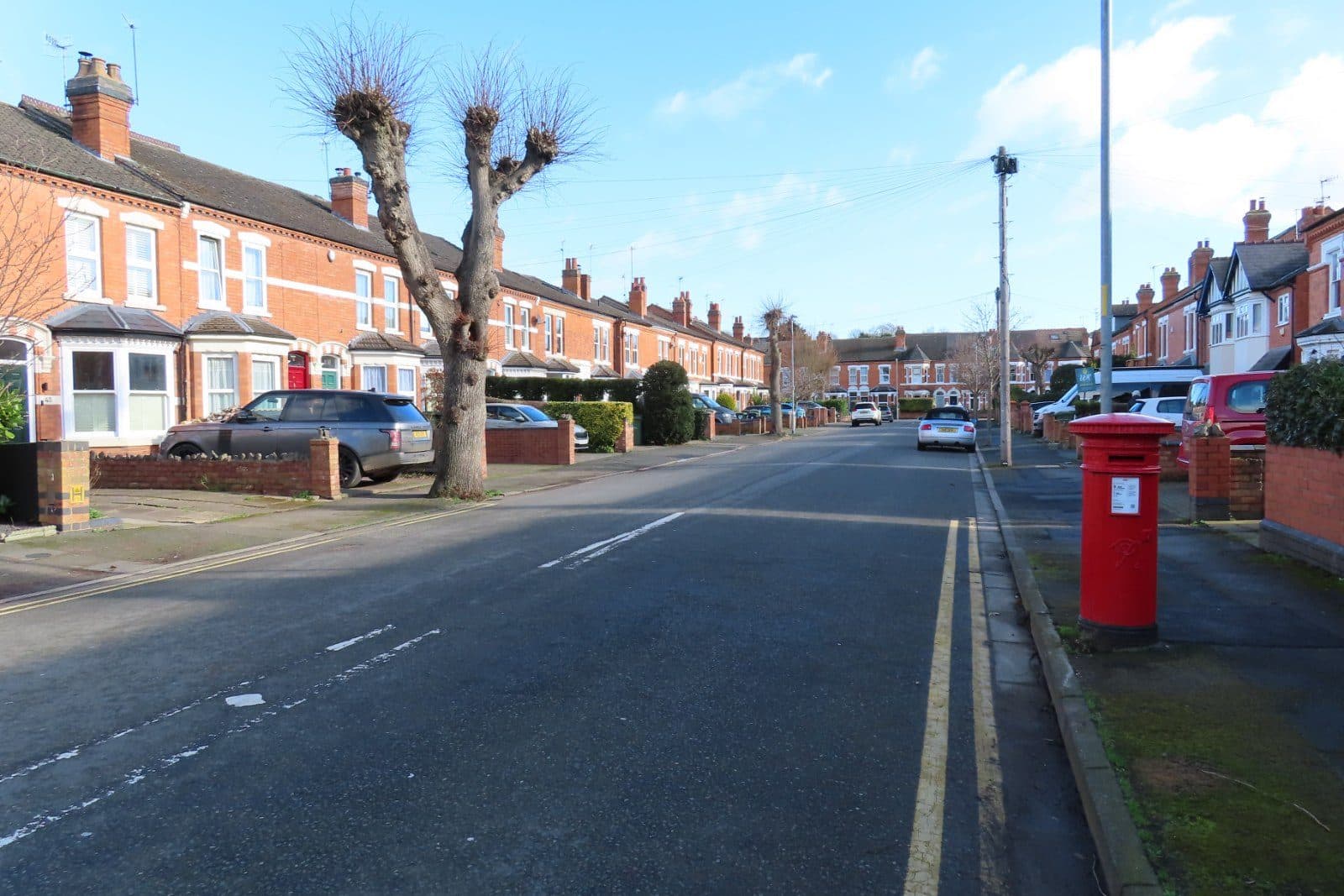
Shrubbery Avenue and Park Avenue: the street side is controlled
Shrubbery Avenue's Article 4 direction came into effect on 20 December 2018. It covers the conservation area of the same name, which takes in Shrubbery Avenue and parts of Shrubbery Road, Flag Meadow Walk and Barbourne Road. Park Avenue, which the council describes as a speculative suburb of late 19th and early 20th century houses, became a conservation area in 2020, running from Ombersley Road to Sabrina Avenue, and its direction took effect on 27 August 2020.
Both directions bring the fronts of houses, and sides facing a street, under planning control. That includes alterations to the roof on those elevations, so a new front rooflight needs planning permission, as do chimney and porch changes. Behind the houses the normal conservation area rule applies: a rear dormer is not permitted development and needs permission, while a rear rooflight usually does not. On these terraces the usual design is a rear dormer, or an L-shaped dormer where the house has an outrigger, with the front slope left as it is.
York Place in the Britannia Square conservation area has had its own Article 4 direction since 1986, and the council publishes a design guide for it.
What the 2026 SPD says about dormers
Worcester City Council adopted its Extensions and Alterations to Dwellings (including Houses in Multiple Occupation) SPD on 29 June 2026. Its section on roof extensions asks for dormers that generally have pitched roofs, are physically small, are set into the roof slope and reflect the traditional styles of the area. Larger additions may be acceptable where they are less visible, but over-dominant or box-like extensions can detract from the house.
The SPD is firm about the front. On streets where front dormers are not part of the character, particularly traditional terraced streets, new ones will normally be resisted, and an isolated or unauthorised dormer elsewhere on the street does not justify another.
Outside the conservation areas
Across most of the city the national permitted development rules decide the question: up to 40 cubic metres of new roof volume on a terraced house and 50 on a semi or detached house, nothing on the slope facing the road, a 20cm set-back from the eaves where practicable, and side windows obscure-glazed and fixed below 1.7 metres. A Lawful Development Certificate confirms the position in writing. Flats, including houses already split into flats, have no permitted development rights for a loft conversion.
Watch for the small conservation areas set among newer housing. In Warndon, Warndon Court covers the buildings around St Nicholas Church and Warndon Court Farm, and Trotshill covers the buildings around Trotshill Lane, so a house there can need permission for a dormer when its neighbours do not.
Questions from Worcester
Can I put a dormer on the front of my Worcester terrace?
It needs planning permission, because permitted development never allows a dormer on the main roof slope facing the road, and the council's 2026 SPD says front dormers will normally be resisted on traditional terraced streets where they are not already part of the character. A rear dormer is the realistic option, with rooflights at the front where the street's rules allow them.
Do I need permission for rooflights on Shrubbery Avenue or Park Avenue?
At the front, and on a side facing a street, yes: both Article 4 directions bring alterations to the roof on those elevations under planning control. A rooflight on the rear slope is usually still permitted development.
How do I find out if my house is in a conservation area?
Worcester City Council publishes a map for each of its 19 conservation areas, with an appraisal for most of them, and its My Local Area service shows whether an address is inside one. The council also offers a permitted development advice service.
Ask about a loft conversion in Worcester
Give us the postcode and we will check the planning position for your street before we visit.